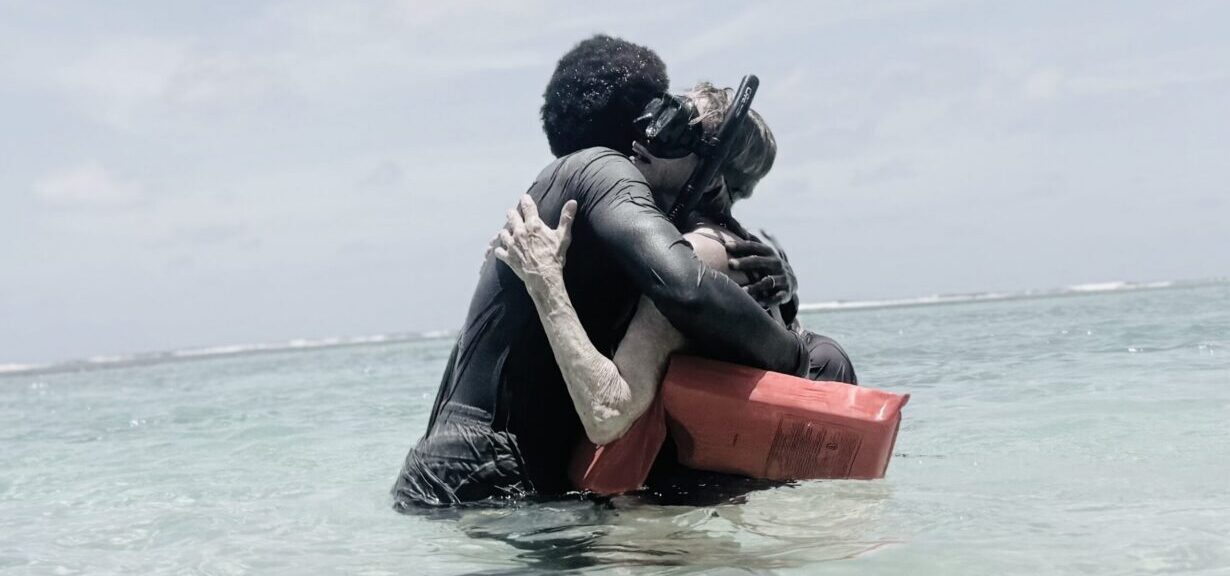
This year, we took my mother to Belize for her 80th birthday. She runs her own business, works full-time, goes to yoga and the gym three times a week, and has a fuller social calendar than most people half her age. She is not afraid of life.
Except for one thing: putting her face underwater.
She is profoundly claustrophobic and, for 80 years, has refused to submerge her head. My brother has tried. I’ve tried. My daughter has tried. It was always a hard no. Still, she gamely joined us on snorkeling trips, floating on the surface for hours, never seeing what swam below. When we’d tell her there was a nurse shark beneath her, she’d respond in her soft Southern drawl, “That’s nice, honey.”
But in Belize, something shifted.
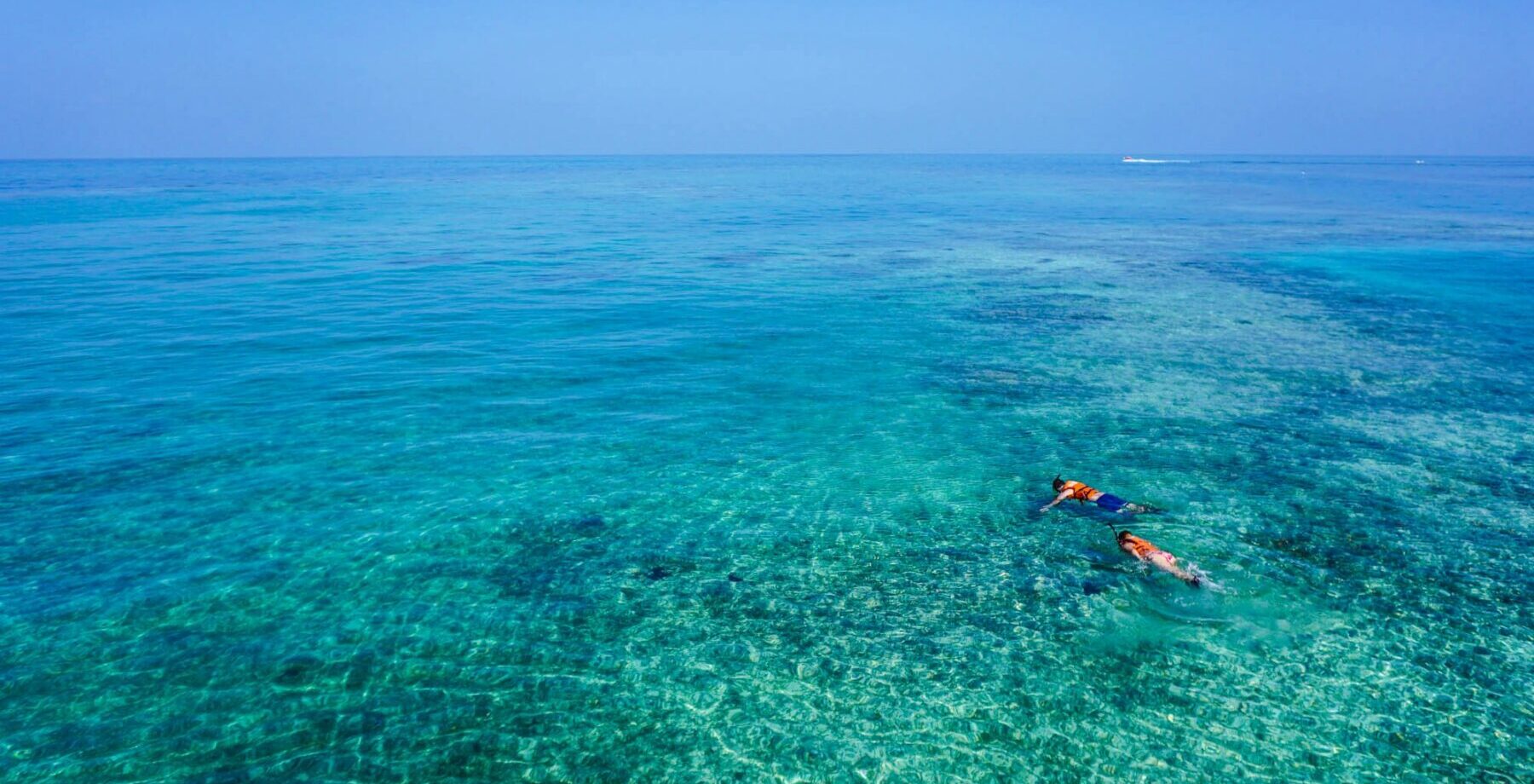
Not only did she put her face in the water, she snorkeled for three hours in the open ocean. Calm. Curious. Fully immersed. We were stunned. After eight decades, she had crossed a line she had drawn around herself for a lifetime.
Our laid-back guide was patient and grounding, and he deserves real credit. But I left that day wondering: why does this happen so often on vacation? Why do people try things away from home that they would never attempt in their everyday lives?
Psychology offers some compelling answers.
 First, travel offers a reset and clear opportunities to expose ourselves to the things we fear. Fear grows through avoidance, a principle central to cognitive behavioral therapy. When we stay in familiar environments, we often structure our lives to sidestep what scares us, unintentionally reinforcing anxiety. Vacations interrupt those avoidance patterns. They place us in new contexts where small acts of bravery happen naturally: navigating a foreign city, tasting unfamiliar food, speaking a new language.
Research by Edna Foa, known for her work on emotional processing theory, shows that fear diminishes when people confront, rather than avoid, the feared stimulus and stay present long enough to experience that the anticipated outcome is less threatening than expected, or perhaps even enjoyable. In Belize, the ocean wasn’t theoretical. It was there—clear, warm, and filled with life. My mother wasn’t pressured. She was invited. That gentle exposure, paired with the vivid and tranquil atmosphere that encourages connection, mattered.
Edna Foa also explains that the looming threat of incompetence drives fear. When those pesky “what-ifs” enter our brains, the anxiety comes not only from the bad thing happening, but from our inability to respond to it well. At home, we are surrounded by constant social expectations; Fear of embarrassment or judgment can loom large. Away from familiar audiences, that pressure softens. Mistakes can feel more acceptable, the impact is temporary, or it’s a good story on a vacation, so we feel more motivated to confront our fears without large-scale judgment. This is called psychological distance. Construal level theory, developed by Yaacov Trope, explains that events framed as temporary or distant carry less immediate emotional intensity. A fear faced “just for this trip” carries lower stakes. It feels contained.
 Second, vacations lower chronic stress. The American Psychological Association has summarized extensive findings showing that prolonged stress heightens anxiety and impairs emotional regulation. Time away from work reduces stress hormones and improves mood. When our nervous systems are calmer, we are more capable of taking measured risk.
If time away from work is paired with exploration, the benefits can multiply. Travel ignites a flurry of positive feelings: meeting new people brings joy, learning about a different culture leads to curiosity, and witnessing towering mountains up close sparks awe. According to Barbara Fredrickson’s broaden-and-build theory, these positive emotions expand our cognitive flexibility. When we travel, we literally think more broadly. We become more open to possibilities. Courage becomes easier to access.
The way we view our “selves” shifts, too. Arthur Aron’s Self-Expansion Theory proposes that novel experiences increase our sense of growth and capability. As the Oxford Handbook of Positive Psychology explains, humans psychologically grow when exposed to unfamiliar experiences. Research has found that immersion in unfamiliar experiences can increase cognitive flexibility, integrative thinking, and a stronger sense of personal capability. Travel is rich with novelty; it can rewrite the story we tell ourselves about who we are, and we feel less confined to being the person we have always been. This means we are more open to exploring other possibilities when we travel.
 So yes, vacation courage is real. It isn’t magic. It’s the product of reduced stress, increased novelty, psychological distance, and a renewed sense of self.
Somewhere between the shoreline and the reef, my mother decided, on her own terms, that she was ready. And once she slipped her face beneath the surface, the world she had avoided for 80 years opened up.
If you want to explore other sides of yourself while traveling, join our newsletter or schedule a quick call so we can discover which type of adventure works best for you.
