Why Young People Should Use Travel Agents

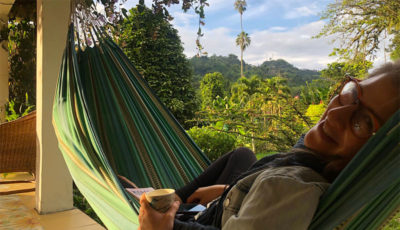
Hello there, fellow young, adventurous travelers. I know you. You probably stumbled onto this post in the midst of reading hundreds of reviews and blog posts in anticipation of your next trip to Peru, or Thailand, or Mexico. You’re planning on booking and organizing the whole thing on your own because, well, it didn’t occur you that there may be another way. Yep, I’ve been there, and I’m here to lead you to the light.

As a 20-something, I am of a generation that has had the internet at their fingertips for every trip I have ever planned, and there have been many. From quick trips up to Maine to three-week long expeditions to Spain and Morocco, I’ve relied on reviews from Trip Advisor, hotels.com, and (who are we kidding, I am still a 20 something) hostelworld.com. If I hadn’t had the good fortune of pursuing a career in travel right to Elevate Destinations’ cyber door, I would probably still be blindly encouraging everyone else to do the same. I understand, I do. The vast majority of you probably don’t know what a travel agent is, or if you do, you either assume that they went extinct right around the time we graduated from car phones, or that they still exist but only in small pockets of octogenarians. Worst of all, you might think travel agents are for naïve sissies who don’t know how to flex their internet muscles – certainly not you.

Here’s the deal, travel agents receive better rates than the general public, sometimes astronomically so. They also have access to unique tiny lodges and hotels that you will never find on the major booking sites. They make money by charging you a fee somewhere in between their discounted rate and the general public rate, often this is wrapped up into one simple quote. This is a huge win for you! You end up with the same, if not better product, with the added value of having someone who knows a lot more about travel taking care of all of the logistics, giving you advice, and making all of the bookings. Perhaps most importantly, if something goes wrong while you’re traveling, you have someone you can call for help instead of being SOL in Timbuktu.

If you’re thinking you have to have a huge budget to use a travel agent, that’s also not true. Different companies have different specialties; there are agencies that only go to Ireland, some that only do cruises, some that only work with celebrities, or a select few like my company that specialize in luxury eco travel.

You’re young, you’re busy, you have more exciting things you could be doing. So stop reading this, Facebook, Reddit, and Trip Advisor, and go call or email an agent (some will even let you text them!). Tell him or her what you want, then go outside, enjoy the spring weather, and let someone else worry about how you’re going to get from Salta to Patagonia in 48 hours.

And remember my friends, travel is the only thing you buy that makes you richer.

Family Voluntourism – Thoughts to Help You Start Planning!

With daylight savings behind us and an extra hour of sunlight in our days, families are looking forward to summer and their summer travels. More than ever before parents are considering jumping in on the fast growing “voluntourism” trend. In case you’ve missed the boat on the hottest thing in travel since frequent flier miles, voluntourism is essentially what it sounds like. Travelers integrate volunteering into their trip, whether for an afternoon or the entire length of their itinerary. For families, the idea is particularly attractive. Today when many parents are concerned about raising “socially conscious” children, it’s a perfect way to benefit others while also shifting perspective from their own lives.

With the booming popularity of the field, there are an endless amount of options. Your family can really do just about anything, anywhere, at any price point. Here are some things to consider:

• First of all, is this a good fit for your family? There’s no magic age at which children are prepared for a volunteering trip, but a good base line is if they still take naps, they’re too young. From there, take into account the type and length of volunteering you’ll be doing. A good first trip for young ones is working with sea turtles in Mexico or Costa Rica. The time difference isn’t so great and they’ll easily identify with the cute wildlife aspect. Working in orphanages or hospitals in a poverty stricken area is a very different matter though, and you and your children should have some very real conversations beforehand to make sure that everyone is prepared. Here is a great example of a family friendly Costa Rica itinerary.

• How long do you want to volunteer for? While some families want to dedicate their entire two-week vacation to volunteering, many would like to slip in some traditional relaxation too. This is OK! There is no need to feel guilty because you not so secretly want to soak up some vitamin D on your holiday. It can be hard on the conscious going from working in extremely poor conditions to staying in a top rate hotel though, so make sure you pick a place with an excellent record for its sustainability practices and community involvement. A great example of this sort of blend is this itinerary from Elevate Destinations.

• What sort of volunteering do you want to do? As I mentioned above, you can volunteer doing just about anything you can imagine, it’s just a matter of finding the right fit. Working with children is by far the most popular request, but if you do so expect to spend a full week and maybe more. It’s important to be conscientious of the fact that these are kids, not a tourist attraction, and a greater level of commitment is necessary. Other things you can do include physical labor such as construction and beach clean up, but also applying your day job! Many underfunded organizations love to have help with their design and marketing campaigns.

• How much do you want to spend? Many volunteers are surprised that they have to spend anything at all to lend their services, but in reality a volunteering trip costs about the same as a “normal” trip. Your accommodations and food still need to be accounted for, and the cost usually includes a donation for the organization. How much you spend will depend on if you’re staying in a basic guest house style accommodation or a hotel, and if you decide to do some traditional touring at the end of your service. Some exotic options can be quite affordable, such as this two week itinerary to volunteer with desert elephants in Namibia for $2000.

Overall, one of the most important things you can do when planning a family voluntourism trip is to work with a reputable travel provider. While a basic beach vacation can be easily planned online through any number of online booking sites, volunteering is a little something different. You’ll want to find a company that has established connections with non-profits and organizations where you’re going, and has a great reputation for treating their partners well. Make sure to ask for testimonials from former travelers, the best companies will even be happy to put you touch with past travelers so you can talk to them directly about their experiences.

Most importantly, have fun! You’re embarking on what is going to be one of the most memorable trips you and your family have ever taken.

Packing for Safari: What You Need and What You Don’t

Congratulations! You’re going on the trip of a lifetime! Whether you’ve selected your safari in Kenya, South Africa, Tanzania or some other exotic location, at this point you’ve been dreaming of your itinerary for months. But now it’s getting closer and you actually have to pack something. Hopefully you’re not like me with your packing habits. Without fail I get out my suitcase to pack one hour before a domestic flight and two hours before an international one.

Packing for safari flummoxes a lot of travelers because it’s a weird hybrid of exotic, outdoor adventure and very luxurious accommodations. There are a lot of safari packing lists out there, that’s not what this is. This is a quick run down of commonly packed safari items and an evaluation of whether or not they’re actually at all useful.

Don’t need (if you’re a man): Dinner Jacket

Even the nicest safari camps and lodges are still casual for dinner. You will be comfortable in khakis and a button down at even the highest end accommodations. After a long, dusty day of game drives, the main emphasis is on showering and feeling clean and comfortable.

Need (if you’re a woman): Below the knee skirts

In many safari countries, wearing shorts above the knee is very disrespectful and you will stand out like a sore thumb. Having two or three long, lightweight skirts in your bag is the best thing you can do. There is a misconception that you need to be wearing hiking boots and pants (see below) to go on a game drive. Not true! Unless you’re going on a bush walk, you will be viewing animals from the comfort of a Land Cruiser, so skirts and sandals are completely fine. They are also extremely versatile; I wore mine to dinner, to visit a local school, on game drives, and in transit.

(Check out this nifty one I found on etsy with a subtle pocket for cash.)

Debatable: Convertible Khaki Pants

Let me sum this question up this way, if your very first time ever setting foot into an EMS is to buy these pants, then you don’t need these pants. Was it nice having a light-weight, non-skirt option with me? Absolutely. Did I ever once convert them into shorts? Nope. If you’re someone who enjoys hiking, camping, etc, and will use these again in this lifetime, then go for it. Otherwise, they’re really not necessary.

Don’t Need: Pith Helmet

Don’t be that guy in camp. Just don’t.

Need: A hat

A hat is an essential part of your packing list. The sunrays are very strong and you’ll be spending a lot of time in an open top vehicle. They’re also remarkably handy for swatting tsetse flies if you’re in an area where they’re prevalent. Sun hats are great, but really a baseball cap will do just fine as well.

Don’t Need: Mosquito Netting

I seriously saw this on several popular packing sites on the world-wide web, so apparently it needs to be addressed. There are a few basic things that any half-way decent lodge or camp should be able to provide you with. Mosquito netting is one. Protection from lions is another. If they’re missing the first, I would be very seriously concerned about the second.

Debatable: Hiking Boots

If you are planning on including bush walks on your safari, then hiking boots are great to have to protect your feet and ankles from brush and critters. If you’ll only be doing game drives however, you don’t need them at all. They’re quite cumbersome to pack, so definitely think before including them.

Need: Headlamp

Your room or tent is bound to include a flashlight or two, and there are typically escorts around camp at night, but I still find a headlamp to be incredibly useful to have around. Hands-free lighting comes in handy for all sorts of things such as reading, rifling through a suitcase before dawn, or doing a critter check from the comfort of your bed.

Great if you have roomPack for a Purpose

Use leftover space in your luggage to bring supplies for needy children in the area you’re visiting. Many lodges and camps have teamed up with this great organization, just search for where you’re going and they’ll give you a list of things they need. Examples include deflated soccer balls, colored pencils, and band-aids. When you arrive just pass the donations off to the hotel staff who will take care of everything. It’s an easy way to give back to the local community.

Haiti Update

Tropical Storm Isaac ripped through the Southeastern region of Haiti where our volunteers had been just weeks before.

The good news is that the Let Haiti Live youth and staff are safe. In addition, the work that we did in Civadier was not affected. The construction has held and, most importantly, the youth that we worked with can never lose the knowledge and time that our volunteers provided for them.

The bad news is that the Let Haiti Live’s main office’ roof was blown off by the winds. In addition to no longer having a main office for operations, Guerlyne’s Cyvadier home is no longer inhabitable. Many of our youth also need some basic support, as their homes were also affected as was their parents’ main harvest of the season.

We have set up a Razoo team page – The Elevate Haiti Allies – made up of individuals who have participated in an Elevate Destinations service trip to Haiti and have a long-term commitment to Let Haiti Live: http://www.razoo.com/team/Elevate-Haiti-Allies

The program will not be able to run normally until the office gets a new roof and the staff and youth members and their families receive basic support to get back on their feet.

Please help raise money today to help Let Haiti Live build a new roof, provide support to its staff and youth members and families!

Funding will go to:

  • reconstruction of the main offices
  • financial support of the staff, youth and their families
  • operational expenses incurred during this emergency phase
  • maintaining programs for the duration of this year

We will raise the money between now and September 14 – the sooner the better to be able to provide folks with quick assistance!

Thank you for support! Please reach out to Andrea Atkinson andrea@elevatedestinations.com if you have questions!

Things We Learned Volunteering in Haiti

***There is evidently an infinite capacity for a human being to become dirty. While expectation may be that you can only get “so” dirty, that has been proven false. As follow up, the first shower in a light-colored tub (with running water and soap/shampoo) after many days of bucket baths, you will audibly gasp when you see the rivers of mud washing off you and down the drain. Then, like directions on a shampoo bottle, even after you “lather, rinse, repeat” you will STILL turn the towel brown when you dry off.

*** Soccer/football, makes everyone giddy.

*** A smile, “Mesi” (thank you), and Bonjou/Bonswa go miles and miles, across pretty much any divide.

***A group of people sitting around a table all simultaneously remembering, then swallowing, anti-malarial medicine is a funny sight.

***Whatever you previously believed to be your maximum capacity…for carrying heavy loads up steep hills, for sleep deprivation thanks to friendly roosters, for trying new things, for appreciating beauty, for feeling, for laughing, for loving—you will exceed this capacity on a trip like ours.


Haiti Team Creeping Back Onto the Grid

The Elevate Haiti team has been unexpectedly off the grid for our trip/work in the south of the country. Based on the precipitous side of a mountain outside Jacmel, in the welcoming-beyond-all-expectation community of Cyvadier…the tech gods were not smiling on us. In spite of an absent Internet signal (that has worked, at least spottily, in previous years) team members have completed a rigorous and heart-expanding week of tough labor moving raw construction materials up the hill, and teaching two large groups of young people who never tired of classes and interacting with volunteers.

[Read more...]

Volunteering in the Wake of a Disaster – The Pros, The Cons and How to Do So Effectively

It’s been nearly two and a half years since a devastating earthquake shook Haiti, rocking the country to its core and leaving those living there to pick up the pieces and rebuild shattered lives. Shortly after the quake struck, volunteer groups from all over the world began flocking to Haiti in an attempt to help. Some gave money, others donated resources, still others boarded planes and flew to Haiti so they could donate their time. While most of these efforts were certainly well intentioned, it quickly became evident that some of these volunteer initiatives were actually causing more harm than good.

There are a number of pros and cons to volunteering in areas that have suffered from a natural disaster, and many differing opinions on the matter. Some people feel that volunteering to help your fellow man is something that everyone should do. Others feel that the increasing popularity of volunteer programs has shifted from helpful to detrimental, even going as far as referring to it as “disaster tourism”. The truth is each side makes a compelling argument.

Why Volunteer?

When a country is devastated by a natural disaster, such as the Haiti earthquake, the people who live there are often left feeling overwhelmed with emotion and facing an uphill battle that is almost beyond comprehension. Between grieving for loved ones who didn’t survive to dealing with the loss of what property they owned, overcoming the situation can seem an insurmountable task. Volunteers who donate their money, time and resources can help the victims of disaster to rebuild their lives. This is especially critical when the area and communities affected do not have the funds to do so on their own.

When Good Intentions Go Bad

Where volunteer work becomes detrimental to a community is when the programs themselves are not properly designed to be effective. After the 2010 earthquake, Haiti was bombarded with individuals and groups who came to help but only served to cause more damage. Instead of working alongside the people of Haiti and helping them develop long-term, sustainable solutions, many volunteers simply swept in and took over. While they undoubtedly had good intentions, in fact this actually caused more harm to an already volatile community because it resulted in displacement of local workers and did nothing in terms of knowledge transfer or skill training.

Many groups did not take into account cultural, economic, social or environmental considerations in-country and imposed their own ideals and programs, instead of looking to locals for solutions that they could assist them with.

Given the sheer number of inexperienced people desiring to lend their assistance, there is also the real concern of programs being abandoned, never fully accomplishing their goals and leaving the vulnerable victims facing a whole new set of problems with no solution in sight.

Effective Volunteerism

While both sides of the argument are certainly thought provoking, the actuality lies somewhere in the middle. Volunteering can be a critical tool in the recovery of these types of tragic events; however it must be structured in a way that it will produce real results that have a positive impact, not just today, but on a long-term basis.

Developing a volunteer program that both benefits a community as well as positively impacts the volunteers involves much more than simply sending a group of people into a community in need. In order to truly be effective, a volunteer program must aim to accomplish six key goals:

  • Address sustainability: Understand the environmental, economic, and social benefit for communities to ensure that the work being done provides a well-rounded and aligned support of sustainable development goals.
  • Provide long-term solutions that contain defined plans for positive impact well into the future. There are too many programs that have been started by well-meaning volunteers and organizations only to be abandoned.
  • Work with well-established organizations that have proven track records of success, transparency and long-term commitment to the community.
  • Help raise funds: Provide fundraising support to non-profit partners which will serve to multiply the impact of the program.
  • Employ and engage locals: Volunteering to get something done that could be done by a local employed to do a job is not effective. The goal should be to employ local labor, making certain that local jobs are not displaced.
  • Work in solidarity not superiority: Developing cross-cultural relationships is one of the most effective things that can come of a volunteer program. Work side-by-side with locals, learn from them and support them while maintaining respect for their culture and knowledge.

Volunteerism plays a critical role in our society as a whole. Without it, disasters could potentially destroy entire communities and further devastate lives. When carried out effectively, volunteering helps to rebuild lives and restore hope for a sustainable, positive future. For this reason, it’s always recommended that those wishing to donate their time do so through a professional, experienced organization so that the work completed is as effective and impactful as possible.

Elevate the Gulf: Interview with Mark Spalding, President of The Ocean Foundation

On April 9, 2012, Elevate Destinations and The Ocean Foundation will bring a team of volunteers to the Gulf Coast to participate in a week long service trip to help revitalize an eco-system that was devastated by the BP oil spill. These travelers will take part in restoration of the oyster reef, seagrass bed and coastal marsh habitats while experiencing the culture and culinary arts of this unique destination!

Mark Spalding (photo courtesy of The Ocean Foundation) will be joining this team to participate first-hand in this incredible opportunity and partnership. Not only is Mark the president of The Ocean Foundation, but he is also a practicing lawyer and policy consultant. In the past he has worked with organizations like the Consultative Group on Biological Diversity, the International Bering Sea Forum, the Council of the National Whale Conservation Fund, the Alaska Conservation Foundation, the San Diego Foundation, the International Community Foundation, the William and Flora Hewlett Foundation, Fundacion La Puerta, and a number of family foundations. Because of this work, Mark is seen as a major contributor to some f the most significant ocean conservation campaigns in recent years.

The Elevate Destinations team was lucky to catch up with Mark to get his thoughts on his work with The Ocean Foundation and the upcoming Elevate the Gulf trip. Below is a transcript of our interview. A big thank you to Mark for your time and your contribution to the oceans of the world! We cannot wait for April to get here!

How did you become involved with the Ocean Foundation?

Back when the Ocean Foundation was created, I was a professor in the International Relations program at UC San Diego, and like many faculty members, I took some consulting jobs on the side to pay the rent.  Many of those jobs involved international conservation objectives, in particular international ocean conservation and occasionally, international ocean conservation and philanthropy.  So some folks found me and asked if I would I help design the Ocean Foundation and I agreed to do so.  We built the whole thing around a set of models of community foundations, obviously in our case without a geographic set of boundaries and in our case with a very narrow subject matter.  Once I got done designing it, they offered me the opportunity to run it and eight years later, here I am!

With the oceans being a non-geographic area in terms of national ownership, what do you think is the biggest challenge that your foundation faces in terms of conservation?

I think the big thing that we face, that any of us in ocean conservation faces, is that no one lives in the ocean. At best our view of the ocean is very surface.  Sadly that means if you are out on a deck having drinks looking out over the ocean, it doesn’t look different if all the fish are gone and the sea grass is dead and all of the coral reefs are dead.  The water is still there, the color of the sunset is still the same, and the sounds of the waves are probably still the same.  It’s getting people more connected to the fact that a tremendous amount of protein comes from the ocean, half of our oxygen supply comes from the ocean, and a whole lot of other functions of the ocean protect us from extreme cold and extreme heat, sequestered carbon and all of those ecosystems services are irreplaceable and yet out of sight.  They just aren’t at the forefront of people’s minds.


What are some unexpected human actions that directly affect the health of our oceans?

Well the biggest threat to the ocean is climate change.  Therefore all of our use of vehicles and consumption that results from the burning of fossil fuels is contributing to climate change, which in turn is changing the ocean’s chemistry, circulation patterns, and temperature.  So that’s the biggest thing that we all do.  In addition, we as people have done a pretty poor job of managing our fisheries so over-fishing of the ocean has been a severe human impact on the ocean.  Third is basic pollution, and while climate change is related to pollution as well, and the carbon going into the ocean is a pollutant per se, when we talk about pollution we are talking about plastics and oils and all that stuff in the ocean that just shouldn’t be there.  I’ll often say we really have two problems with the ocean.  We take too much out and put too much back in and all we have to do is stop taking too much good stuff out and stop putting too much bad stuff in.  It all boils down to that.

How does your work with the Ocean Foundation, and perhaps Elevate’s upcoming trip to the Gulf, attempt to combat these problems?

Fundamentally what we need to do is restore the resilience of the ocean.  We need to reverse the harm done to the ocean, which is basically our mission statement at the Ocean Foundation.  So looking at something like this trip, if we can replace oysters and have the reefs that they at one time occupied be rebuilt, all of those systems in front of and behind those reefs could recover.  Many of those systems recover quite naturally without us doing much else.  Thus we will have oysters as filter feeders, cleaning the water, and making it possible for other plants and animals to survive in these places.  We will have more marsh grasses growing which will take up carbon out of the atmosphere and sequester it, which will be a good thing when dealing with climate change.  And we’ll have a healthier place.  We have had dramatic things that happened like the BP oil disaster in the Gulf, but you know, we have, for a long time, been damaging the Gulf with a little prick here, a little cut there: a relocation here, building a pier there.  The old saying, a death by a thousand cuts is really what we are seeing here and we have the opportunity now to react.  I think this is truly about the future and it gives us something to work on.  This gives us hope.  Therefore the restoration of the ocean’s capacity to do things for us, again, ecosystem services stuff, is something positive that we can be doing about our future and our children and grandchildren’s futures.


Because oceans are so seemingly disconnected from our daily lives, ocean conservation is the most difficult form of conservation for sustaining hope and I think that’s the most dangerous part about its long-term restoration.

Yes, I think that’s right.  There was this assumption on one hand that it was so big that the resources in it were so big that we could take anything we wanted.  And that it was so big that dumping oil in it here or there couldn’t do it any harm.  So there was this blithe assumption that it was so big and so powerful that we couldn’t do it any harm.  And ironically now, it flips, right?  The change that we have brought is so big and so powerful that it seems intimidating to try and do anything about it.  But we have to undo the harm the same way we did the harm, one little bit at a time.

How did you originally become involved with Elevate?

I actually went on a trip that was sponsored by a charter club, The Center for Responsible Tourism, and met the Executive Director of Elevate.  Dominique and I learned that we had a lot of interests in common and that we had a lot of opportunities for collaboration.  So we have been looking for those opportunities ever since and I am really excited that this came together!

What are you most looking forward to during your trip to the Gulf this year?

I am looking forward to being out of the office, being out of Washington D.C. and getting out into some of the places that we care about.  I am looking forward to seeing old friends and colleagues in the Gulf area that we work with or support, but I also am really excited because this is an opportunity for new friends to come along with us on a trip and see what a beautiful place this is.  To help us restore it and make it even more beautiful, as beautiful as it was before we messed it up.  We have to start somewhere working on restoration, we have to accomplish some things and if we don’t we are fundamentally failing ourselves going forward.  I am not ready to give up and I am not ready to feel overwhelmed.  Getting started on this now is the time to do it.

For more details on the trip and how to get involved please visit the Elevate Destinations website or contact info@elevatedestinations.com. Reserve your spot now as April is just around the corner!


Interview conducted by Emily Gershen.

Highlights from Costa Rica

I attended the CREST Travelers’ Philanthropy conference in Monteverde, Costa Rica this past week on behalf of Elevate Destinations to present on our volunteer trips in Haiti and the Gulf.

Here are some highlights:

1) Monteverde, Costa Rica - The setting alone was magnificent. Known for the Cloud Forest Reserve – Monteverde feels truly magical. The winding mostly dirt/rock road you take to reach it makes it even more mystical. I tried to walk as much as possible between session to take it in.

Seriously. Check it out.

2) Offsetting my carbon! One of the conference outings offered the opportunity to plant trees to help offset the carbon from flying in to Costa Rica. It was great to get out of the conference hall and into the reserve to get my hands dirty and help contribute to the amazing efforts that are being done by Costa Rica to become one of the first carbon neutral countriesClimate Action Alliance and Costa Rica Conservation Association facilitated the opportunity.

3) Pushing the envelope around travel, volunteering and donors. Coming together with a group of likeminded people that are doing their best to make a difference is not always just pats on the back and congratulations all around. People don’t always agree with a method or a perspective or they’ve tried something and it hasn’t worked. It was refreshing to see people admit failures or bumps.  In the end this is a great thing – it helps each of us to look around, strive to look at things a different way and push to do better. (More on this in another post).

Simbiosis by Manuel Obregon. Manuel Obregon is a famous Costa Rican composer and now the minister of Culture for Costa Rica. 12 years ago he took a piano out into the forest for 3 days and recorded Simbiosis using the sounds of the forest and his piano to create  a synergistic composition. I had the once-in-a-lifetime experience of hearing and watching this amazing presentation live the last day of the conference. Wow.

5) Meeting awesome people.
To name a few:

Chris Blackwell - though we only spoke for a minute or so – this was my starstruck moment of the conference. This guy is pretty inspiring. We all know him for Island Records – but his work in Jamaica is really amazing. Most island hotels ship in food from abroad – Chris is working on an organic agriculture program in Jamaica to support the local economy and grow food locally.

Kevin Salwen - I got the chance to talk extensively with Kevin – since we shared a 4 1/2 hour bus ride sitting near each other. Kevin wrote The Power of Half about how he and his family decided to cut their “stuff” down by half and give half to charity. Not only is it an inspiring story- Kevin “gets it” in a way most don’t. His family regularly visits Uganda and has created a genuine connection there. This is his book – looking forward to reading it.

Soledad Naranjo - our amazing partner in Costa Rica for eco-tourism. She is truly one of the nicest and smartest women you will ever meet.

Richard Edwards of Planeterra and GAP Adventures. He moderated my panel on voluntourism and has some great thoughts on the subject. Wish we could have had him as a panelist too to hear more. Follow him on Twitter.

Marco Bollinger and Eytan Elterman, fellow bicultural travel junkies and founders of IseeItravel who are forging the way in utilizing video, photography and social media in enhancing the authentic travel experience. Thank (or blame) them for getting me to focus on blogging again as a main component of my social media strategy! Enjoy filming your documentary in Osa guys!

One thing I’d like to see in the future from conferences like this – more from the “beneficiary” viewpoint. The questions this conference kept bringing up for me was – how is power maintained for those who are “receiving” donations and support? How can we contribute to philanthropy that supports a balance of power between the “investor” and the “investee”? This was addressed to a certain extent – but I think it is important to continue to explore the solidarity component of philanthropy and travel.

Happy Earth Day

Happy Earth Day to all of the Responsive Travelers from the United States! The writers at the Responsive Travel Blog want to know what you are doing to celebrate this Earth Day. Are you pledging to Carbon Offset all of your travel this year? Are you going to participate in a neighborhood clean-up? Are you going to help a community in a country that you’re visiting plant trees?

Here are some highlights from great organizations that work year-round to celebrate the Earth:

EcoLogic Development Fund

EcoLogic’s longtime partner in Totonicapán, Guatemala, the Association of the 48 Cantons, has received a grant from Rainforest Alliance for US$30,000 for the construction of two greenhouses which will each produce approximately 17,000 trees a year. EcoLogic will provide a third greenhouse as well as training for the operation of the greenhouses and reforestation of the surrounding areas. The three new greenhouses will be in addition to the existing greenhouses which produced 110,000 trees in 2010. (Information courtesy of Ecologic Website)

Conservacion Patagonica

In the Chacabuco Valley, 46 people work to create Patagonia National Park.  Everyone is Chilean; the majority are from Cochrane, the closest town.  Along with volunteers and visiting experts, they are the ones building the trails and campgrounds, monitoring and protecting the wildlife, and restoring the damaged grasslands–the jobs you would guess land conservation encompasses.  But they are also the ones operating and maintaining the machinery, landscaping the park headquarters, and cooking for workers and volunteers–the “behind the scenes” roles that provide critical support for building the park. (Information courtesy of Conservacion Patagonica Blog)

The School for Field Studies

Understanding the local views on the ecological and socioeconomic challenges facing the communities in which we work is key. Our ongoing research and close ties with community stakeholders allow students to make meaningful contributions to long-term conservation solutions. In Maasailand (Kenya), indigenous trees are being cut down for agricultural development and the harvesting of charcoal. This deforestation, in combination with a long drought, has resulted in widespread soil erosion, habitat loss, and a negative impact on the health of humans, livestock, and wildlife. Soil degradation threatens the water supply and dust bowls are causing respiratory and vision complications. To counter this disturbing trend, our faculty and students are planting trees in partnership with local elementary schools and community members. Local conservation organizations grow saplings of indigenous species like Acacia and Balanites in nurseries and sell them to SFS for the reforestation effort. (Information courtesy of School for Field Studies website)

Let us know what you are doing today and Happy Earth Day!